One job, followed through
Misted rooflight replacement, stage by stage
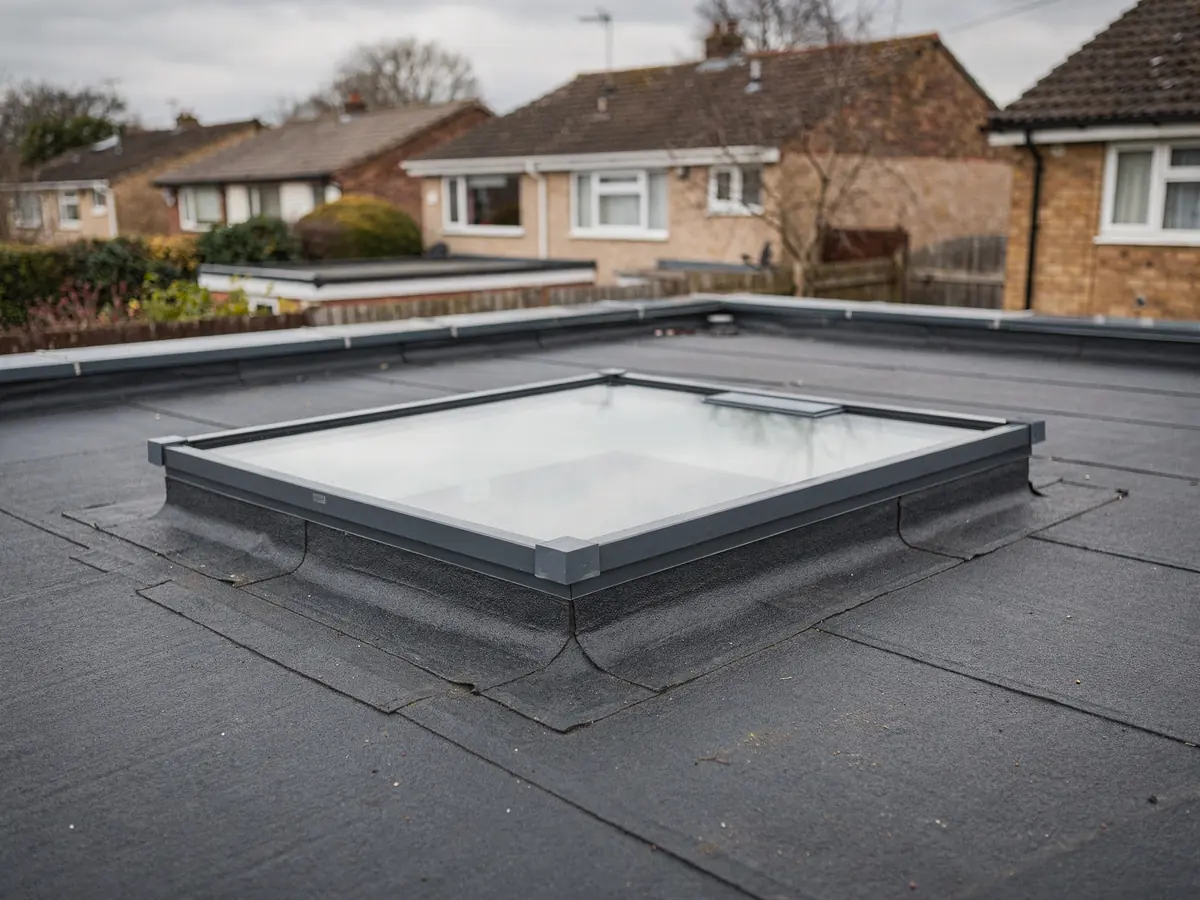
Follow one job through: a 1980s brick house in Covingham, its kitchen extension capped with a flat roof, and a rooflight that has slowly turned grey and cloudy. Seven stages carry it from the first look at the glass to the signed-off finish. Each one shows what we examine, what goes onto the plan and the day the work falls on.
Stage 01 · The symptom
A grey film inside a sealed unit
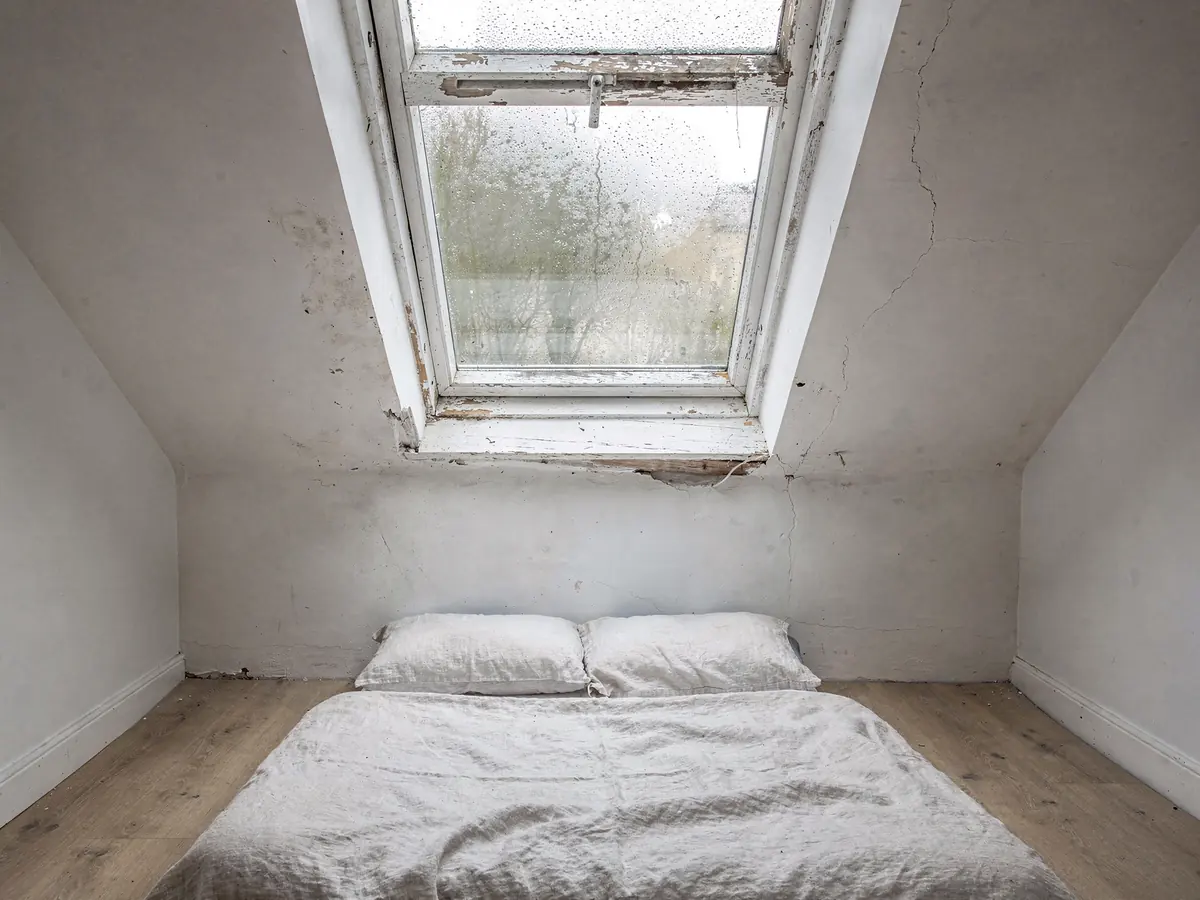
The kitchen in this diary has had its rooflight for as long as the owners have lived there. For a couple of winters they noticed a haze on the glass first thing in the morning, which cleared by lunchtime. Now it stays. A pale, patchy film sits inside the unit, and on a bright day it shows as a milky blotch against the sky. They have cleaned the outside, and then the inside, and neither made the slightest difference. That is the usual first sign of a failed sealed unit.
A sealed unit is two panes of glass held a fixed distance apart by a spacer bar around the edge, with a thin seal bonding the glass to it. The gap between the panes is filled with dry air or an inert gas, and the spacer contains a desiccant that soaks up any trace of moisture. While the edge seal holds, the gap stays dry and clear for years. Once the seal opens, even slightly, damp air enters and the desiccant is overwhelmed.
From then on the moisture condenses on the cooler inner face of the outer pane whenever the temperature drops, and evaporates again when it warms, which is why the haze comes and goes before it becomes permanent. Mineral deposits are left behind as the water dries, and those are what stay as the film. The unit cannot be dried out or cleaned from outside. Our guide to why rooflight glass mists between the panes explains the mechanism in more detail.
The owners ask a sensible question at this stage: is the rooflight leaking? Misting between the panes is a different thing from rain coming in. The glass has failed as an insulator and as a clear window, but the roof around it is a separate matter that the survey will look at on its own. Either way, the next step is the same. Someone comes, looks at the unit properly and writes down what has to be done.
Cleaning cannot reach a film that sits inside the sealed unit.
| What you see | Where it is | What it means |
|---|---|---|
| Wipes away from the room side | Inner face of the inner pane | Room condensation, not a failed unit |
| Wipes away from outside | Outer face of the outer pane | Dirt or dew outside |
| Will not wipe from either side | Between the panes | Failed edge seal, unit to be replaced |
| Comes and goes with the temperature | Between the panes | Seal already open, getting worse |
Stage 02 · The survey
Reading the data plate and measuring the unit
The survey begins at the rooflight and at the roof around it. We read any maker's mark on the frame or the edge of the glass. A flat rooflight often carries a small label with a product name and a date, and the date tells us how old the unit is and whether the maker still supplies parts. A roof window has a data plate on the sash with a size code and a year. Those details settle whether a matching part exists or has to be made.
Next we measure. A new sealed unit is made to the millimetre, so the figure has to be right the first time. We take the width and the length of the old unit, the overall thickness, and the size of the frame opening that holds it. We check that the frame is square, because an out-of-square frame changes the clearances the new unit needs. The thickness matters as well. Modern units can be a little thicker, and the frame rebate has to take it.
Then we look at what the unit sits in. The frame may be aluminium, timber or plastic, and the glazing seals or gaskets, the drainage channels at the base and the upstand it stands on all affect the decision. In the Covingham kitchen the aluminium frame is sound and the kerb is dry. That is good news, because it points to a glass-only job. Not every survey ends that way, and we say so plainly when it does not.
While we are on the roof we note the access: how the new unit will get up, where the scaffold or tower would stand, and whether anyone has to carry glass over a neighbour's boundary. A large unit is heavy, and a made-to-measure pane cannot be cut down on site. All of it goes into the file, along with photographs of the old unit and its labels, and the file becomes the job plan.
What gets written down on the roof
- Maker's mark, product name and date
- Width, length and thickness of the old unit
- Frame material, squareness and condition
- Glazing seals, drainage and upstand
- Access for lifting the new unit
- Photographs of the unit and its labels
Stage 03 · The decision
New glass in the old frame, or a whole new unit?
This is the decision that shapes everything after it, so the job plan records it as its own line. Option one is fresh glazing dropped into the existing frame. Nothing else on the roof is disturbed: the frame, its kerb and the covering all stay, and only the glazing changes. Option two is a whole new rooflight, frame and glass together, set on the kerb in place of the old one. Each suits a different set of circumstances, and we set out the reasons for the choice in writing.
Swapping only the glazing makes sense where the frame is sound, the seals around it are in good order, the unit is a standard type that is still made, and the thermal performance of the old frame is acceptable. It is quicker, it disturbs less of the roof, and the lead time is that of the glass alone. Our guide to new glass or a whole new unit works through the factors in order, with the questions to ask at each point.
A whole unit makes sense where the frame is worn, bent or corroded, where the product has been discontinued and a matching unit cannot be found, or where the old rooflight was never very good at holding heat. A new rooflight is a chance to meet today's limits for rooflights rather than those of the year it was installed. It costs more on the day and lasts longer, and the plan weighs the two against each other before you decide.
There is a regulatory difference, too. A new sealed glazing unit on its own is not notifiable. Frame and glass together make a controlled fitting, which is notifiable, and the new rooflight then has to reach the limits current for an existing dwelling. In the Covingham kitchen the frame is sound, the unit is a standard type and the owners prefer the smaller job. So the plan says glass only, and gives the reason in a line.
The reason for the choice goes on the plan beside the choice.
Fresh glazing only
- Frame and kerb stay in place
- Suits a sound, standard frame
- Shorter lead time, smaller job
- Not notifiable to Building Control
Whole new rooflight
- Frame and glass replaced together
- Suits a worn or discontinued frame
- Meets today's limits for existing homes
- Notifiable, sign-off in writing
Your glass replacement job plan, in writing
- Unit
- New sealed glass unit, or a whole new rooflight, decided at survey
- Size
- Measured unit and frame, both sizes written on the plan
- Permission
- Looked up for your street, and what we find is stated
- Building Control
- None for glass only; we notify it for a whole new unit
- Lead time
- Stated at the order, since the glass is cut to size
- Fitting day
- Old unit out, new unit in, opening closed the same day
- Sign-off
- A written specification and our ten-year workmanship guarantee
Clear glass again, and the reason written down.
The verdict
Stage 04 · The glass
Specifying the new glass to match or better the old
Whichever route is chosen, the new glass is specified in writing. A replacement should do at least what the original did, so the survey notes the build-up of the old unit where it can be read: the thickness of each pane, the width of the gap between them and whether there is a coating. Where a label survives, we use it. Where it does not, the supplier can often identify the glazing from its edge and measurements, and we confirm that before the order goes in.
For a flat rooflight or dome the outer pane is normally toughened, which means it breaks into small blunt pieces rather than long shards. The inner pane is the one over the room, and we recommend it is laminated: two layers of glass bonded to a clear interlayer, which hold together if it cracks. Part K of the Building Regulations does not ask for laminated glass in a dwelling roof, which makes it our advice rather than a rule. Whichever glass is chosen, it is named on the plan.
Thermal performance depends on more than the number of panes. A low-emissivity coating on one surface of the gap cuts the heat that passes through, a warm-edge spacer reduces the cold line around the perimeter, and a gas fill in the gap improves things further. The sealed unit is where those details live. A new unit typically performs better than one made a couple of decades ago, and our page on energy efficient rooflights sets out the figures behind that.
Solar control is the last option. If the extension faces south and the table sits right under the glass, a tinted or coated outer pane reduces the heat and glare that build up. If the old unit had it, the new one should too. If it did not, and the owners have found the room uncomfortably bright in summer, this is the moment to add it. The coating is part of the sealed unit, so there is no extra visit and no change to the frame.
| Part of the unit | What the plan states | Why it is named |
|---|---|---|
| Outer pane | Toughened, thickness given | Handling and impact |
| Gap and gas fill | Width in millimetres, fill type | Heat loss through the unit |
| Inner pane | Laminated where over a room | Holds together if cracked |
| Coatings | Low-emissivity, solar control if wanted | Comfort and glare |
| Spacer | Warm-edge type | Cold edge and condensation |
Stage 05 · The paperwork
When Building Control applies, and when it does not
The paperwork follows from the decision. Putting a new sealed glazing unit into the existing frame is not a notifiable job, because the frame and its fixing are not being touched. We still write the glazing specification into the job plan so there is a record of what went in, and you can show it to a surveyor if you sell the house. No application is needed and no Building Control inspection is booked for a glass-only replacement.
Fitting a wholly new rooflight or roof window is another matter. It counts as a controlled fitting, so the job is notifiable and the unit you fit needs to reach the current limits for existing dwellings. The thermal limits sit in Part L 2021. A roof window must reach the figure for windows generally, and a rooflight has its own, higher figure. We read both against the maker's declared numbers for the unit before ordering. We check the maker's declared figures for the unit before the order goes in.
The Building Control body may be the council itself, or a private firm registered as a building control approver. For a notifiable job the notification is ours to make, with the specification and the declared figures attached, and we book whatever inspection the approver wants. At the end, the completion certificate comes to you, and you keep it with the other papers for the house. Every detail is on the job plan, so there is no surprise waiting later.
Planning permission is a separate question again. A like-for-like replacement of a rooflight that is already in the roof normally raises no new planning question, because nothing is being added. But if the new unit is a different size or stands up higher, the position can change, and so can it for a flat or a listed building. We look up the position for the house and report what turns up. The council decides. For the rules in full, read our guide to planning permission for rooflights.
Glass only is not notifiable. A whole new unit is.
Points we look up for your house
- Glass only, or whole unit, and so notifiable or not
- Declared performance of the new unit
- Whether the size or height of the opening changes
- Conservation area, or an Article 4 direction
- Whether the house is listed
- Building Control route and approver
Stage 06 · The order
Made to measure, and the wait that follows
Standard-size units are sometimes available from stock. Most replacement units for older rooflights are not standard. They are cut and sealed for the individual opening, which means the order cannot be placed until the size is certain, and the glass takes a while to arrive once it is. The survey fixes the size, the plan states it, and the order follows once you have agreed the plan. The lead time is confirmed at that point, not guessed in advance.
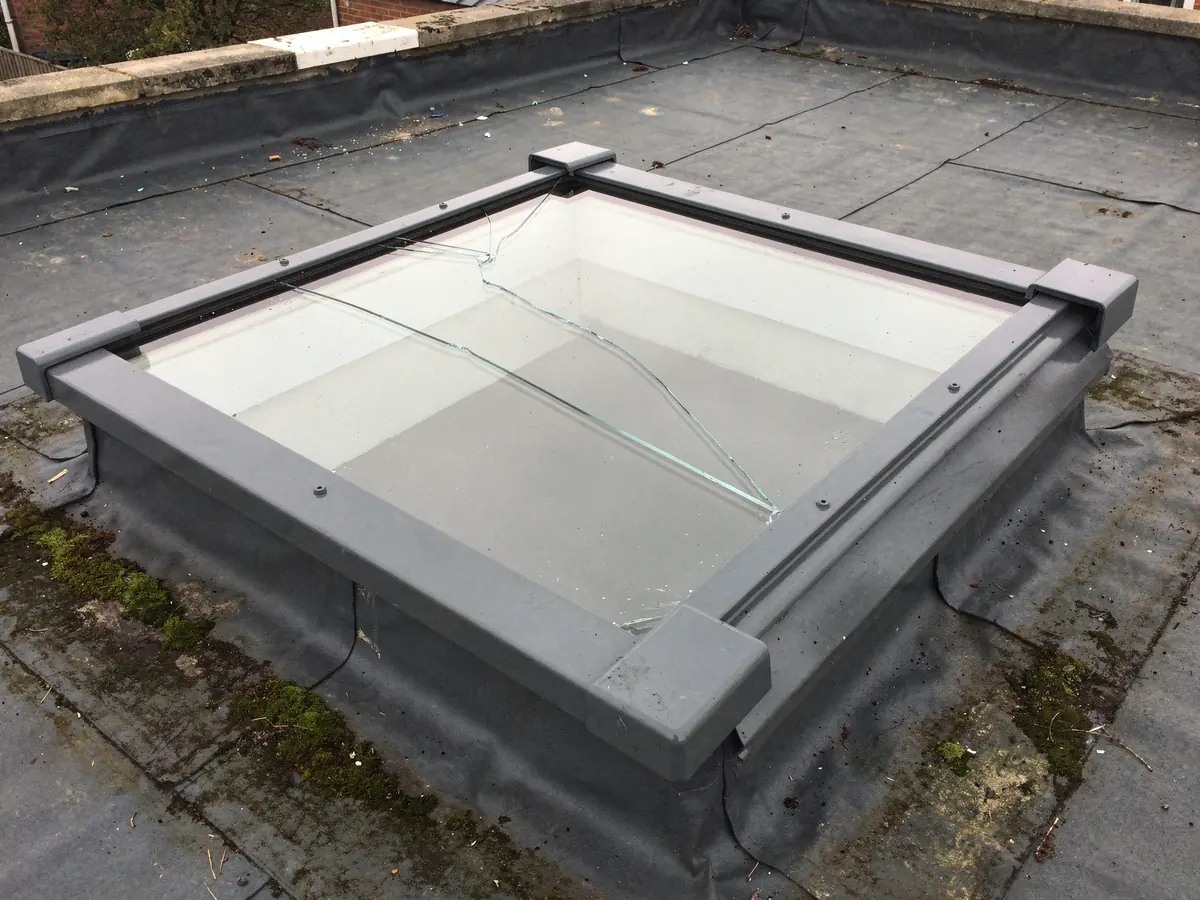
That waiting period is when the old unit goes on doing its job as best it can. It is misted, but it is still keeping the rain out and still closing the opening. If a pane has cracked, the picture changes: we say what can be done to cover the opening until the new glass arrives, and the guide to cracked rooflight glass and replacement options describes it factually, including why a cracked pane should not be walked on or leaned against.
A roof window is a slightly different order. For these, the maker's size code on the data plate identifies the window, and the letters and digits in it give the width and the height. A VELUX sash with a failed pane can often be replaced by a new sash of the same code. Our answer on replacing just the glass in a VELUX covers when that works and when a whole new window is the better choice.
A lantern is different again. A roof lantern is built from several glazed panels, and one may fail while the rest stay clear. The glazing bars, the caps and the colour all have to be matched, and the outer tint has to agree with the neighbouring panels. Our answer on replacing one glass panel in a roof lantern explains how that works, and when several failed panels point instead to a new lantern.
What shapes the quote for new glazing
| Size | More glass, more weight, a bigger lift |
|---|---|
| Glass build-up | Laminated pane, coatings and gas fill |
| Made to measure | Lead time and a cut-to-size unit |
| Access | Scaffold, a tower or a crane for large panes |
| Matching the original | A tint, a bar layout or a colour to match |
| Glass only or whole unit | A new frame, kerb work and notification |
Factors only. A figure appears on the written quote after the survey.
Stage 07 · The day itself
Swap day, and clear glass over the kitchen
The new unit arrives before fitting day, and we check it against the plan as soon as it is delivered. We look at the size, the thickness and the glass type, and we inspect the edges and corners for damage in transit. If anything is wrong it is found then, with the date still in the future. Nobody discovers on the roof that a pane is a few millimetres short, or that the coating is on the wrong surface.
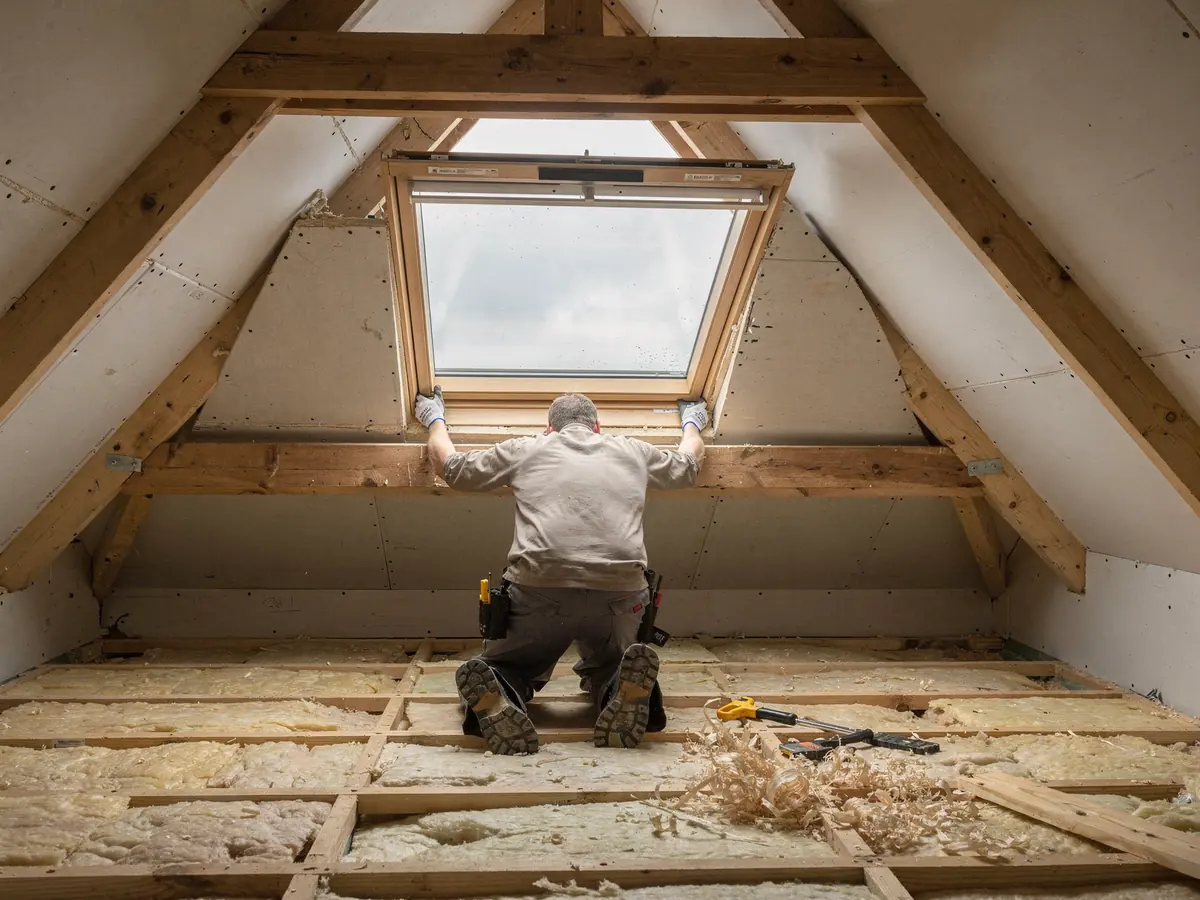
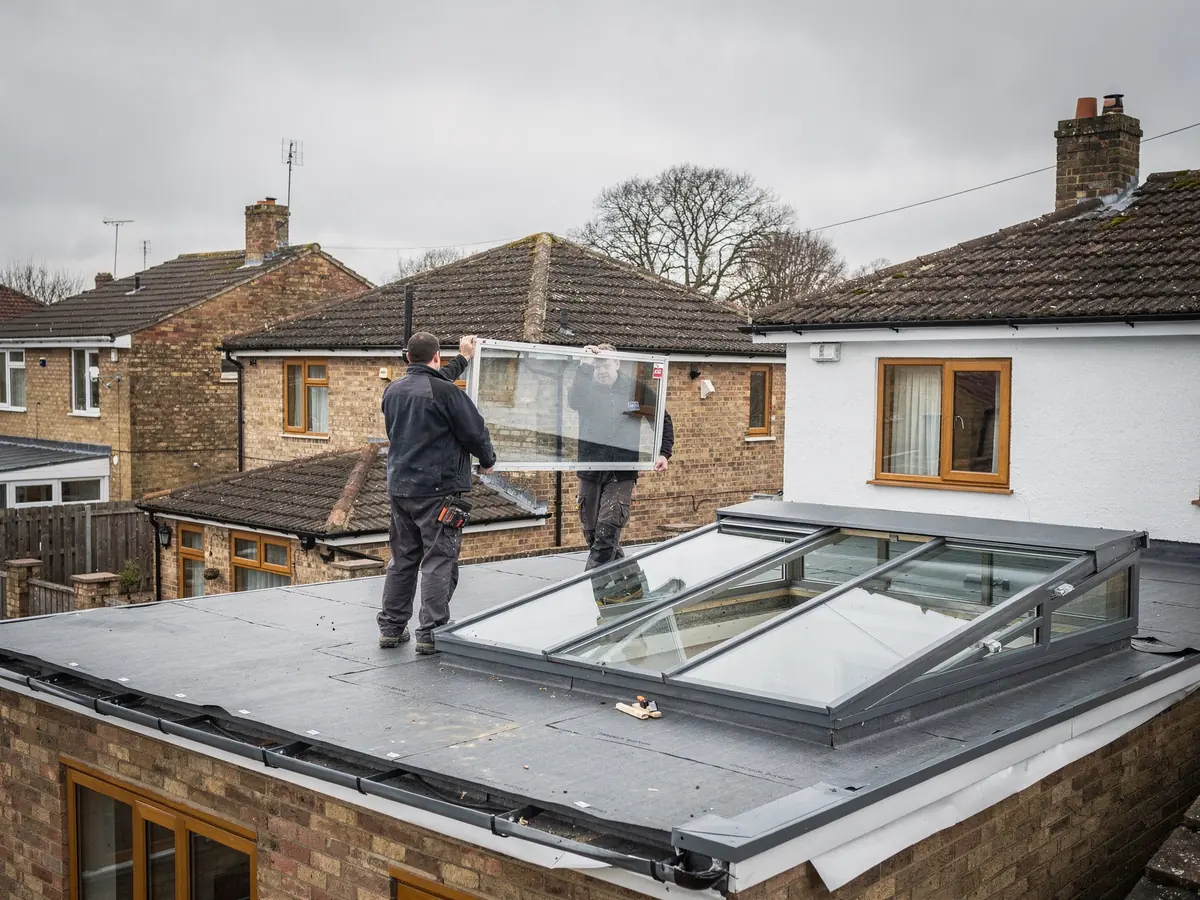
On the day, sheets go down over the floor and furniture and the work begins from the roof. The old glazing bars or beads come off, the failed unit is lifted out, and the rebate and the seals are cleaned and checked. The new unit is set on its packers, positioned so it sits evenly, and held with new beads and gaskets or a fresh bed of sealant, depending on the frame. It is checked from the room and from the roof, so the gap is even all the way round.
A whole new rooflight takes longer, but it follows the same order. The old frame is removed from its kerb, the kerb is checked and the covering dressed to meet the new unit, and the frame is set, fixed and sealed before the glass goes in. We do not leave the opening exposed overnight. If rain is forecast, the date moves before we start instead of halfway through, and the roof is shut again by the time we pack up.
Sign-off is the last page. On a glass-only job you get the written specification of what was fitted and the 10-year workmanship guarantee on our work. On a whole-unit job the Building Control approver inspects, and the completion certificate follows. For the other glass questions, whether a misted rooflight is covered by guarantee explains the difference between the maker's glass warranty and ours. For everything else we do, start at our skylight and rooflight services.
The new unit is checked on delivery, not on the roof.