What is inside a sealed rooflight unit
A double-glazed rooflight is not two sheets of glass sitting near each other. It is a factory-made sealed unit: two panes held apart by a spacer bar running round the perimeter, and the cavity is closed off by a primary seal against the glass and a secondary seal around the outside of the spacer. The gap is usually filled with argon, a heavy gas that conducts heat more slowly than air.
The spacer bar is hollow and packed with a drying agent called desiccant. Its job is to soak up the tiny amount of moisture trapped when the unit was made, so the gap stays perfectly clear for as long as the seals hold. Many modern units use a warm-edge spacer in place of an aluminium one, which keeps the glass at the perimeter a little warmer.
That whole arrangement depends on the edge staying closed. The glass itself does not fail. The edge seals are a bonded joint that lives outdoors, flexing a little with every hot afternoon and cold night, and sooner or later that joint can let go. Once it does, the unit is no longer sealed, however clean and whole the glass looks from inside the room.
- Two panes of glass, each cut to the same size
- A hollow spacer bar around the perimeter
- Desiccant inside the spacer to absorb stray moisture
- A primary seal and a secondary seal closing the edge
- A gas fill, commonly argon, in the gap
How a seal fails and why mist appears
A rooflight is a harder place for a seal to live than a wall window. The glass faces the sky, so it takes the full sun on a summer day and a hard frost on a clear winter night. Water sits on the pane after rain and runs down to the lower edge, where it can rest against the sealant for hours. A flat rooflight on a low pitch holds more standing water against its edges than a vertical window ever does.
Over time the secondary seal can crack or lose its grip on the glass, and the primary seal behind it can follow. Frames that flex, a unit that was not supported evenly in its rebate, or glazing tape that has dried out can all add strain to the edge. The first sign is rarely dramatic. A hairline path opens, and the gap starts to breathe: air moves out as the unit warms and is drawn back in as it cools.
Each time that happens, a small amount of damp air enters. The desiccant takes it up for a while. When the desiccant is full, the moisture has nowhere to go, and on a cold night it condenses on the inside face of the cooler pane. That is the cloudy spot you see, often first at one corner or along the lower edge, then spreading across the glass. It can clear on a warm, dry afternoon and return the next cold morning, which is why many owners think it is a passing problem when it is not.

Why condensation between the panes cannot be wiped away
Condensation between rooflight panes sits in a closed cavity. There is no door into it, no cloth thin enough to reach it and no cleaning product that helps, because the moisture is trapped behind the surface of both panes. Scrubbing the outside or the inside of the glass changes nothing. If the mist is in the gap, it stays in the gap.
Drilling a hole into the unit to let the moisture out is sometimes suggested online. It does not return the unit to working order. The gas fill is gone the moment the cavity is open, the desiccant is already saturated, and the holes themselves become a permanent route for dust, insects and more damp. A misted skylight treated that way clears for a while and then stains, because the water that evaporates leaves its minerals behind on the glass.
Some sealed units are also stained by residue from a degraded edge sealant. That film does not wash off either, since it is on the cavity faces of the glass. Once the cavity has been compromised, the dependable answer is a new sealed unit. Our answer on whether misted glass will clear looks at why the mist sometimes seems to come and go, and why it comes back.
Is a misted sealed unit a failed unit?
In plain terms, yes. A sealed unit is defined by being sealed. Once moisture is inside, the unit has failed at the one thing it was built to do, even if the glass is unbroken and the frame is sound. Installers and glass suppliers use the phrase failed unit for exactly this condition, and the misted rooflight replacement route exists to deal with it.
The failure is a gradual one. By the time mist is visible, the seal has usually been open for some while, and the argon has been escaping. The mist is a late sign, not an early one, which is why a rooflight can look clear in June and cloud over in December without anything having happened in between.
A failed unit is not an urgent hazard in the way a broken pane can be. It does not mean rain can reach the room, because the outer pane and the frame are still in place. It does mean the rooflight is no longer performing as specified, and that the glass will not recover by itself. Many manufacturers give a sealed-unit warranty for a set period, so if the rooflight is relatively recent, check your paperwork and the date code printed along the spacer before ordering anything.
- Mist or droplets visible between the panes
- A cloudy spot that grows from an edge or corner
- Mineral staining or streaks left behind after it dries out
- A rooflight that fogs on cold mornings and clears by afternoon
- A cold feel on the glass compared with a sound unit nearby
Does a misted rooflight lose heat?
It does. The thermal performance of a double-glazed unit comes from two things: the gap between the panes, and what fills it. Argon conducts heat more slowly than air, and a low-emissivity coating on an inside face of the cavity reflects heat back towards the room. When the seal fails, the argon leaks out and is replaced by ordinary damp air. The cavity still has a gap, but the gas is no longer doing its job, and moisture on the coated face affects how that coating behaves.
The effect is real but modest compared with a unit that has lost a pane altogether. A rooflight is a large area of glass in the warmest part of the room's ceiling, so any loss in performance is felt on cold days as a cooler spot overhead and a surface that clouds up on the room side more readily. Our guide to energy-efficient rooflights explains how frame and glass specification fit together.
A new unit is also an opportunity to raise the specification. If the old unit was a plain double-glazed one from some years ago, the replacement can carry a warm-edge spacer, a better coating and argon fill as standard. Where the rooflight is a roof window, A complete new roof window has to meet the window limit in Part L (2021 edition), and a rooflight has its own, looser limit of 2.2 W/m²K. A glass-only replacement is not itself assessed against those figures, but the new unit is a good moment to choose the best the existing frame can accept.
| Feature | Sound sealed unit | Failed sealed unit |
|---|---|---|
| The gap between the panes | Dry, closed and clear | Damp air, mist or droplets |
| Gas fill | Argon retained | Escaped, replaced by air |
| Desiccant | Has spare capacity | Saturated |
| Cleaning | Wipes clean on both faces | Mist stays behind the glass |
| Next step | Nothing to do | New unit or new rooflight |
How to tell if condensation is inside or between the glass
Not every foggy rooflight has a failed seal. Moisture can collect on three different surfaces, and only one of them means the unit has gone. The test takes a minute and needs nothing more than a dry cloth and a bright morning.
Start on the room side. Wipe a small spot of the inside face of the glass. If the mist comes away on the cloth, that was ordinary condensation on the room face, usually from steam, drying washing or a room that is not being aired. Our answer on condensation on a rooflight covers that case and what helps. If a spot is accessible from outside, wiping the outer face may clear mist that formed overnight on the external surface, which is a normal result of a well-insulated outer pane losing heat to a clear sky.
If the mist is still there after both faces are wiped, it is inside the unit. A few other clues point the same way: the mist shows in the same place every cold morning, it has a clear edge following the spacer, and it does not move when you press on the glass. Looking at it from an angle in bright light often shows fine droplets, or a hazy film with a dried watermark left from earlier episodes.
- Wipe the room side: mist that comes away is room-side condensation
- Wipe the outer face where you can reach it safely: mist that comes away is external condensation on a cold pane
- Mist that survives both wipes is in the cavity
- Cavity mist often starts at an edge and keeps its position from day to day
- Dried tide marks inside the glass show earlier episodes
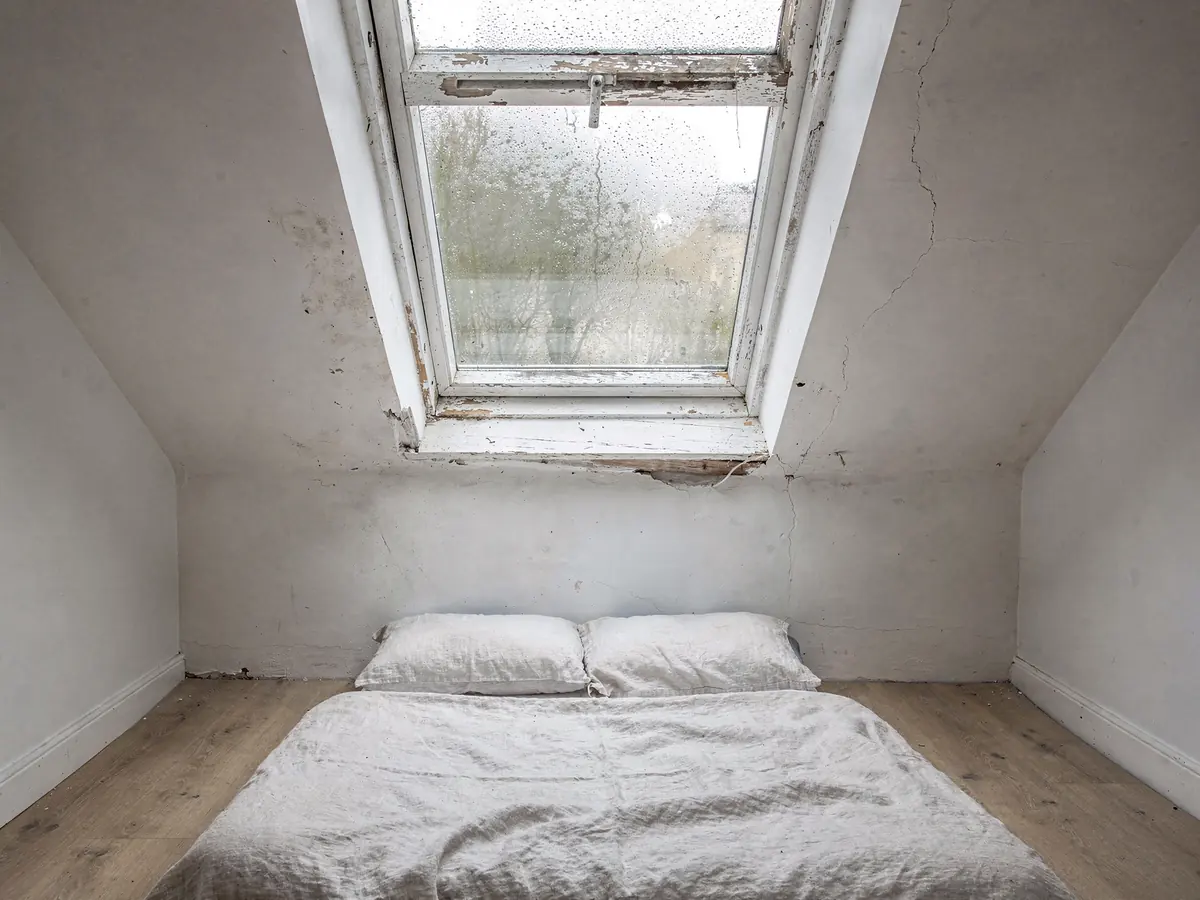
The replacement routes: new unit or new rooflight
There are two sound routes, and the choice depends on the state of the frame. The first is to replace the sealed glass unit only, leaving the existing frame, kerb or flashing in place. This works when the frame is solid, square and free of rot or corrosion, and the manufacturer still makes a unit that fits. The new unit is made to measure from the old one, so the survey records its overall thickness, the glazing bead or capping, and the build-up of each pane. A glass-only swap stays outside the notifiable work. Our sealed unit replacement guide sets out that route step by step.
The second route is to swap the entire rooflight, frame and glass together. That suits a case where the frame is tired, when the old unit is obsolete and cannot be matched, or when the opening would gain from a better-performing product. A new frame with new glazing counts as a controlled fitting, so we make the notification to Building Control within the job.
For roof windows from the big brands, the sealed unit is often a pane that can be exchanged without removing the frame. Our answer on replacing a VELUX glass pane describes that case. For roof lanterns, individual glazed panels can be lifted out and swapped, as covered in roof lantern glass panel replacement.
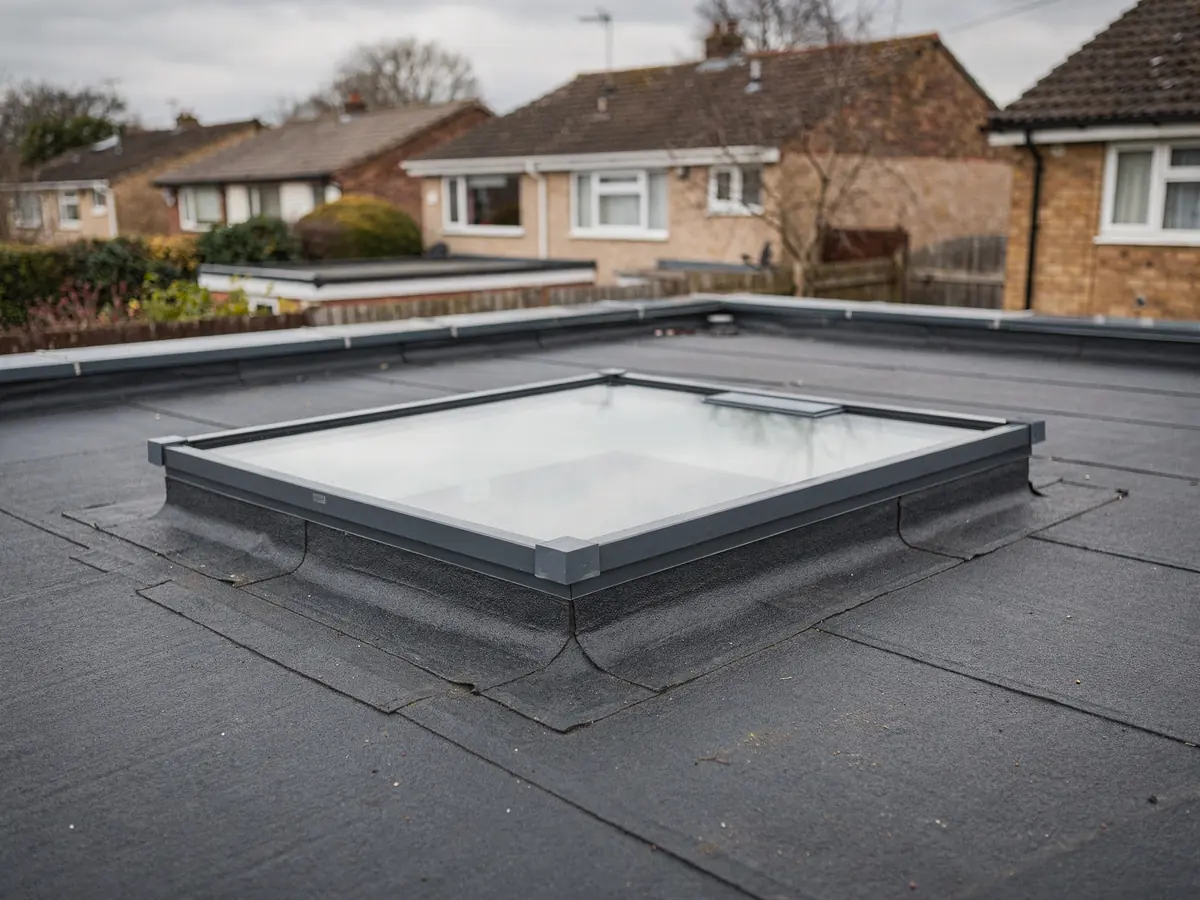
How the swap is planned before anyone is on the roof
A free survey comes first. The survey identifies the type of rooflight, takes the sizes, notes the pane build-up and checks the frame for movement or damage. From that, the written quote and job plan set out which route suits the unit, what glass specification goes in, the order lead time for a made-to-measure unit and the fitting day.
Nothing is ordered until the measurements are confirmed twice, because a sealed unit cannot be trimmed after manufacture. A unit that is a few millimetres out will not sit in its rebate. For that reason the plan records the measurements taken, who took them and the date, and the order follows only after that is agreed.
On the fitting day the failed unit is lifted away, the rebate is cleaned back, and the new unit is bedded on new glazing tape. The fitting carries our 10-year workmanship guarantee. If the plan calls for a whole new rooflight, we notify Building Control where the work requires it, and the sign-off is recorded in writing. You can read more about the broader service on the wider replacement service page, and about cost in the answer on the cost of a glass unit.