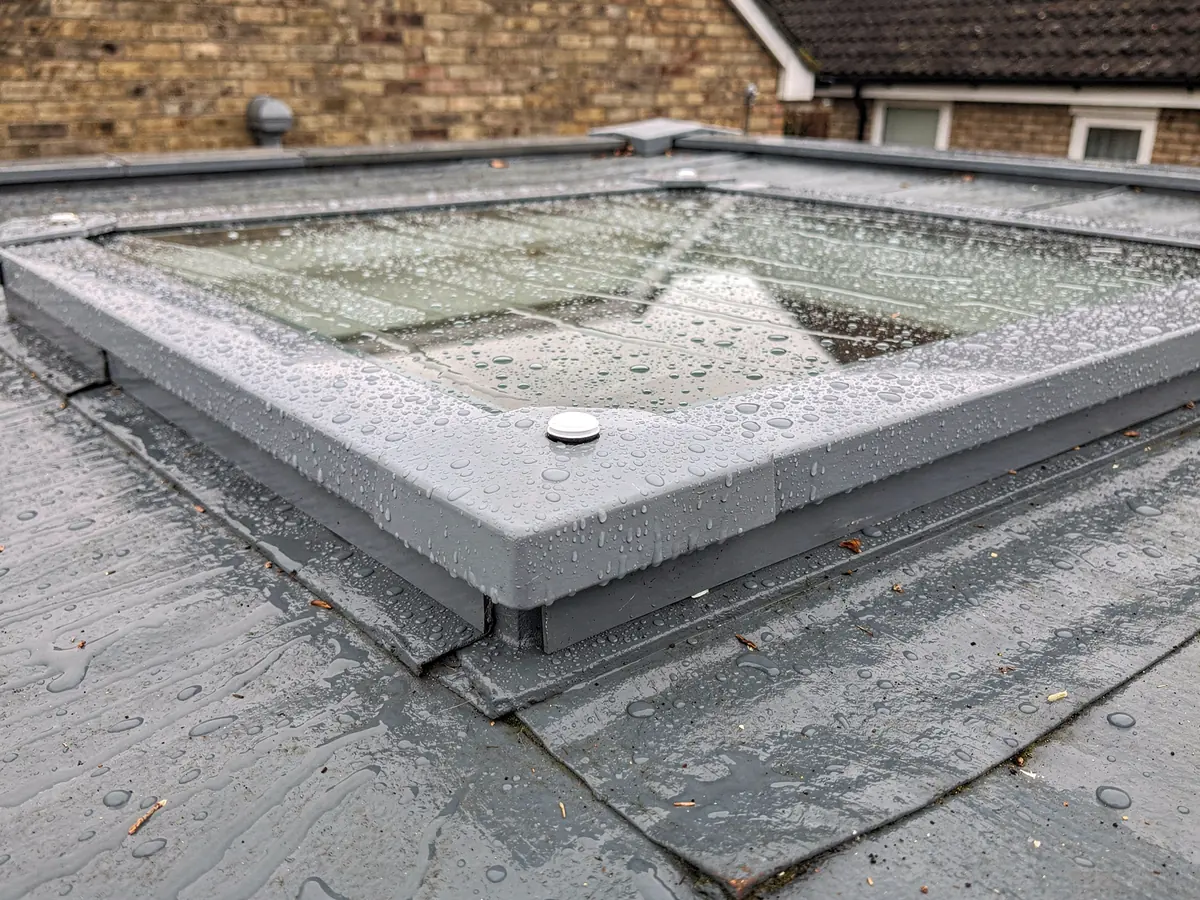
Three ways a rooflight can open
Every opening rooflight has a way of moving the sash or lid, and there are three common ones. A manual unit opens by hand, either with a handle on the sash or with a pole that reaches up from the floor. A mains electric unit has a motor, wired to the house supply, and opens from a switch, keypad or remote. A solar unit has a motor too, but it is powered by a small solar cell on the frame and a rechargeable battery, so no cable runs to the house wiring.
Which suits you is mostly a question of reach and habit. A window you can touch from a landing is easy to run by hand. One above a stairwell, a high loft ceiling or a kitchen island is awkward by hand, and the motor starts to matter. The other question is wiring: some houses have an easy route for a cable and some do not.
The operation is chosen at the survey, with the size and position of the unit, and recorded in the plan ahead of the order. It is not an add-on to decide on the day, because it affects what is ordered and which trades are needed on site.
| Manual | Mains electric | Solar | |
|---|---|---|---|
| How it opens | Handle or pole | Switch, keypad or remote | Remote or wall control |
| Power | None | House supply | Solar cell and battery |
| Cable to the unit | No | Yes | No |
| Best for | Reachable units | Out-of-reach units | Roofs with no easy cable route |
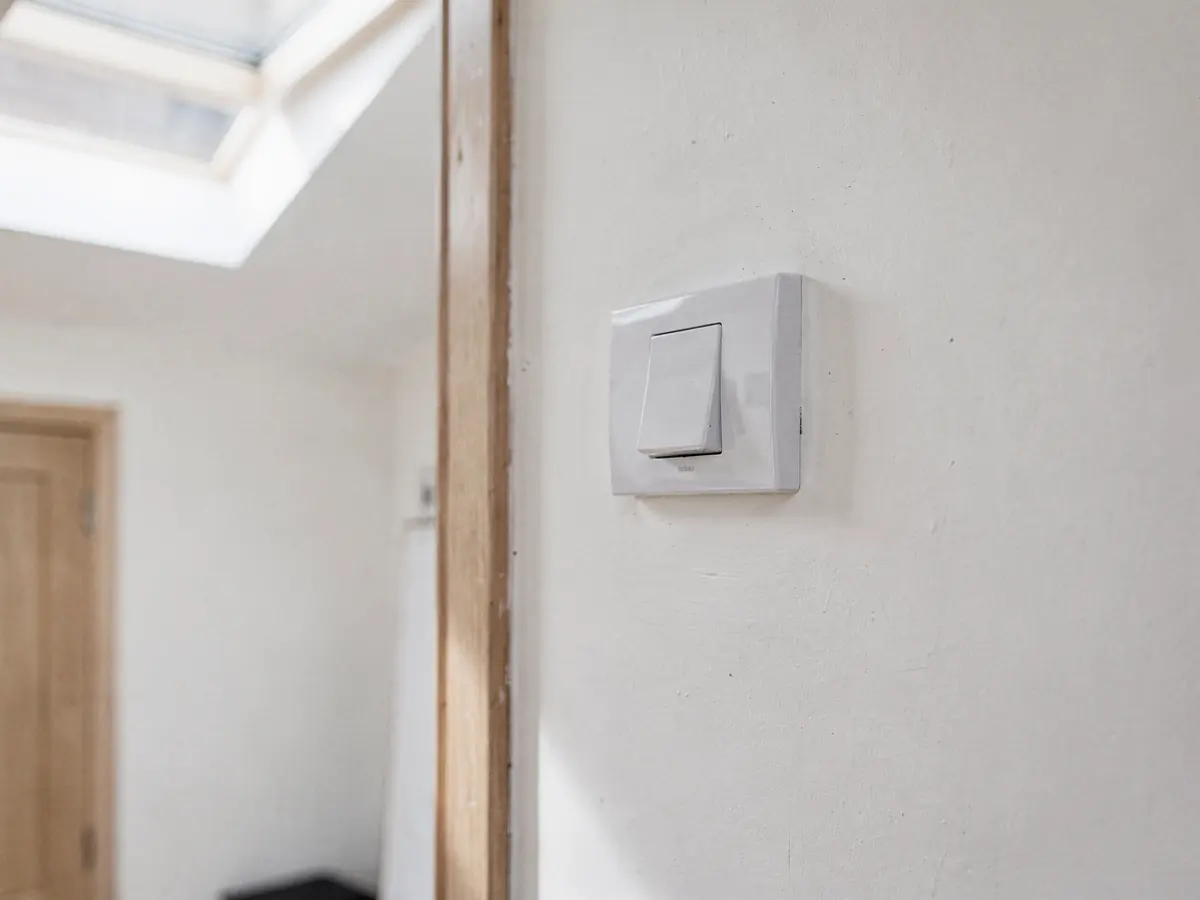
Is an electric rooflight worth it?
It pays off when a manual unit would stay shut. A rooflight that nobody can reach is a fixed light with extra parts, and an opening unit helps air a room only if someone opens it. A motor turns a tall, high or awkward position into a unit that gets used, and many people leave the control by the door of the room.
It adds convenience in other ways too. Electric flat rooflights can be paired with a rain sensor, so the lid closes itself if it starts to rain while you are out. A keypad can open several units together. For a loft with a roof window above a bed, a remote means you never have to climb onto the furniture.
It is not always worth it. A roof window at head height over a landing, opened once a week, works well by hand, and a simple handle is one fewer component to go wrong. The extra cost is the motor, the control and the electrical work, so we ask how you will actually use the unit before recommending anything. For the market figures, our answer on the cost of an electric rooflight has a starting range, and the written quote comes once we have surveyed.
Opening units help air a room, and an open rooflight can reduce condensation in a steamy space such as a bathroom or kitchen. They are not a cure for any problem on their own, and we do not promise one.
What is the difference between solar and electric skylights?
Both have a motor. The difference is the source of power. A mains electric unit takes power from a cable wired to the house, normally through a switched fused connection or a plug socket near the unit. A solar unit generates its own power from a small panel built into the frame, stores it in a battery, and opens and closes from a remote or wall control.
Solar is useful where wiring is awkward. A roof window in a finished loft, with plasterboard and insulation already in place, would need a cable chased through the structure. A solar unit avoids that. The trade-off is that it relies on daylight to charge the battery, so the position and any shade from trees or a taller neighbouring roof count. VELUX publishes its own guidance on this, and we follow the maker's instructions for each product.
Mains electric is steadier. The motor is always powered, and it suits a unit that is opened and closed often, or linked to other controls. It does mean a cable run, a fused supply and a test of the circuit. Our short answers on electric rooflight wiring and solar-powered skylights cover each one in more detail.
In a house with a power cut, a mains unit needs a manual way to open or close, and most have one. See what happens in a power cut for how that works.
- Mains electric: steady power, needs a cable run and a test
- Solar: no cable, but depends on daylight charging the battery
- Both: a motor, a control and a way to close if the power fails
- Both: fitted to the maker's instructions and tested before we leave
How do you open a rooflight that is out of reach?
There are three answers. The oldest is a pole: a long rod with a hook that engages with the sash or a control bar at the bottom of the window, so you can open and close it from the floor. Poles suit modest heights, such as a roof window over a landing or a bedroom with a sloping ceiling that is not very high.
The second is a motor, which is what electric and solar units are for. Where the sash is over a stairwell, a high-ceilinged kitchen or a double-height space, the pole becomes awkward and a motor makes the unit usable. This is the most common reason to choose electric.
The third answer is to choose a different position in the first place. Moving a roof window a little lower or a little to one side, within the rafter layout, can bring it into reach. That is a design choice, made at the survey, with the height of the unit above the finished floor recorded. A roof window should be placed so that the handle or control is reachable, and the view out is comfortable when seated or standing.
For flat roofs the question is different, since a flat rooflight over a kitchen is often two or three metres up. There the motor is the norm, and a wall keypad is wired close to the door.
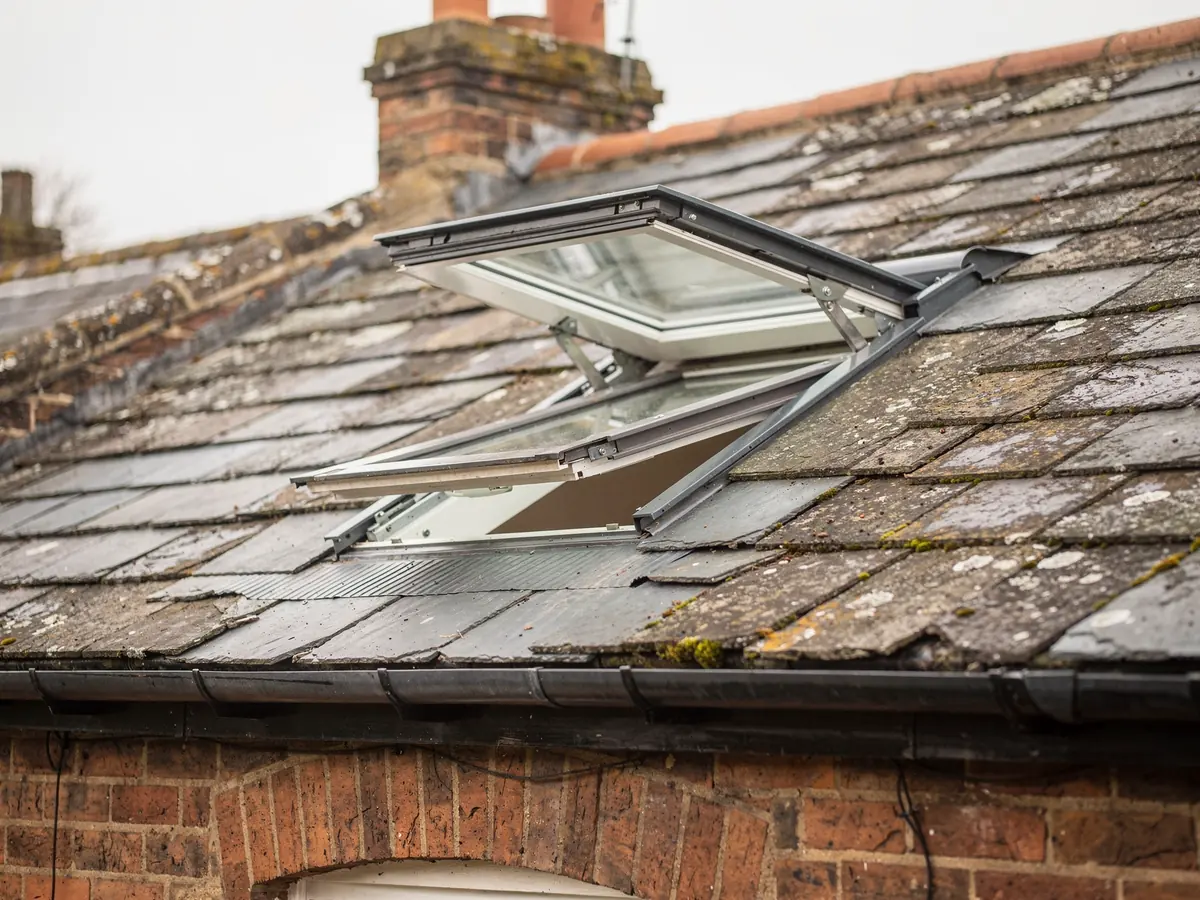
Flat roofs and pitched roofs offer different options
On a pitched roof, the opening unit is usually a roof window. Many are centre-pivot, turning on a central axis, and others are top-hung, opening outwards from the top edge. A pivot window turns to give access to the outer glass for cleaning. A top-hung unit gives a wider opening. Both can be made manual, with a handle at the top or bottom, or electric.
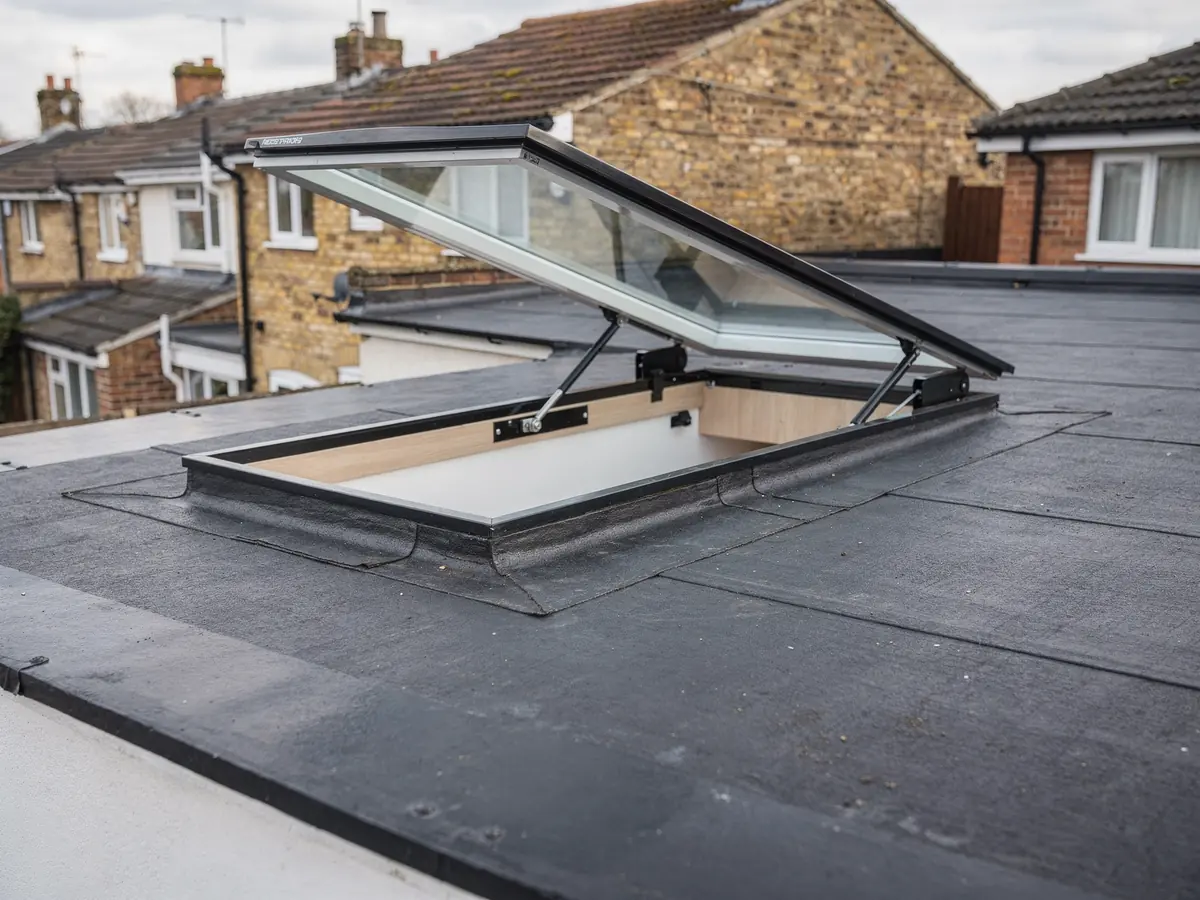
On a flat roof, the opening unit is a flat rooflight with a lid raised on an actuator, or a roof lantern with one or two vents opening outwards. Sliding rooflights and access hatches onto a roof terrace form a further group. Most flat roof units that open are electric, since they sit on an upstand and are out of reach from inside.
A flat rooflight that opens needs a little more roof detail than a fixed one. The kerb has to be built to suit the unit, and the sensor, cable and actuator need a route. What the kerb has to provide is described in the guide to flat rooflight upstands. The service page for electric opening rooflight installation describes the units we fit.
Whichever roof you have, the opening size matters as much as the operation. A tall unit may need clearance above it when open, a lid needs space to lift, and an opening roof window must clear furniture beneath it. The job plan records the clearance.
| Roof | Common opening units | Usual operation |
|---|---|---|
| Pitched, within reach | Centre-pivot or top-hung roof window | Handle or pole |
| Pitched, out of reach | Roof window | Electric or solar |
| Flat, extension roof | Flat rooflight with raised lid | Electric |
| Flat, roof terrace | Sliding rooflight or access hatch | Electric |
| Flat, roof lantern | Lantern with roof vents | Electric or manual |
Can a manual rooflight be converted to electric?
Sometimes, but not always, and it depends on the make and model. Some manufacturers sell a motor and control kit made for a particular model of manual window, and some manual windows cannot take a motor at all because the frame and sash were not built for it. The maker's instructions decide.
Where a conversion is possible, there is still the cable to think about. A mains motor needs a supply to the window, which can mean chasing plaster or running a cable through the loft. A solar kit avoids that, if the model supports it. Because of this, the cost of converting can come close to the cost of replacing the unit with an electric one, and in some cases replacement is the more sensible route.
If the old window is close to the end of its working life, replacement gives you a new unit with current thermal performance, a matched flashing and a guarantee. Replacing a whole rooflight is notifiable building work, so we handle the Building Control notification where it applies. Our guide on replacing a VELUX explains the process for a swap.
At the survey we read the plate on your current unit, check whether a motor option exists for it, and tell you plainly which route makes sense.
What each choice means on fitting day
A manual unit is the simplest day. The window is set into the roof, the flashing or kerb is completed, and the handle is tested before we leave. No other trade is needed and no power is involved.
A mains electric unit adds wiring. The cable route is settled at the survey and recorded on the plan, so the electrician and the fitting team work in the right order. The motor is connected, the control is fixed to the wall, and the unit is run through its full travel several times. The rain sensor, if there is one, is tested too. Fixed wiring in a dwelling is covered by the electrical safety rules in the Building Regulations, so the connection is carried out and signed off accordingly.
A solar unit has less wiring but needs an eye on the position. The panel must face the light, and the battery needs a first charge. We check the remote control, set the travel limits and walk you through the controls before we leave.
For all three, the unit is tested while you are present, and the result goes into the sign-off. The 10-year workmanship guarantee and the written job plan finish the job. If you are weighing operation against other options, the electric opening rooflight page is the place to start.